Saturday, November 5, 2016

FDA cracking down on compassionate-use cases for experimental Polio drug

Pocapavir is a new drug being developed to help with Polio eradication. Currently the modified polio virus contained in the vaccine can be shed from people with immune deficiency. Thus there are fears that the modified polio virus will be shed from an inoculated person and enter the environment and mutate into an infectious strain that the vaccine cannot provide immunity for. The drug Pocapavir hopes to prevent this possibility by utilizing a protease inhibitor to stop viral replication in the cell and a capsid inhibitor to prevent viral capsid formation. This drug is currently under phase 2 clinical trials for this specific application. But the even more interesting possibility is that this drug can be a therapeutic for a virus that has not even been identified yet. Acute flaccid myelitis (AFM) is a disease that causes polio like symptoms in a person but unfortunately the cause of the disease has not been conclusively identified. Many researchers have a hunch that it is caused by an enterovirus which is in the same family as polio, picornaviridae. Thus is 2014 the FDA allowed the usage of Pocapavir as a treatment to children in Colorado where an outbreak of AFM occurred, under a compassionate-use basis even while the cause of the disease was unclear. Benjamin Greenberg, a neurologist who has worked with the drug stated that the drug had a relatively weak but measurable impact on the viral replication. While there has been a growth of cases of AFM in the US the FDA is no longer allowing the company to offer the drug under the compassionate-use basis as they are now requiring the company to apply for a New Drug Application for its usage as a AFM therapeutic. With growing concern of AFM and one death linked to the disease occurring last Sunday it will be interesting to see if the FDA continues to be stern with the testing of pocapavir in a compassionate usage basis.
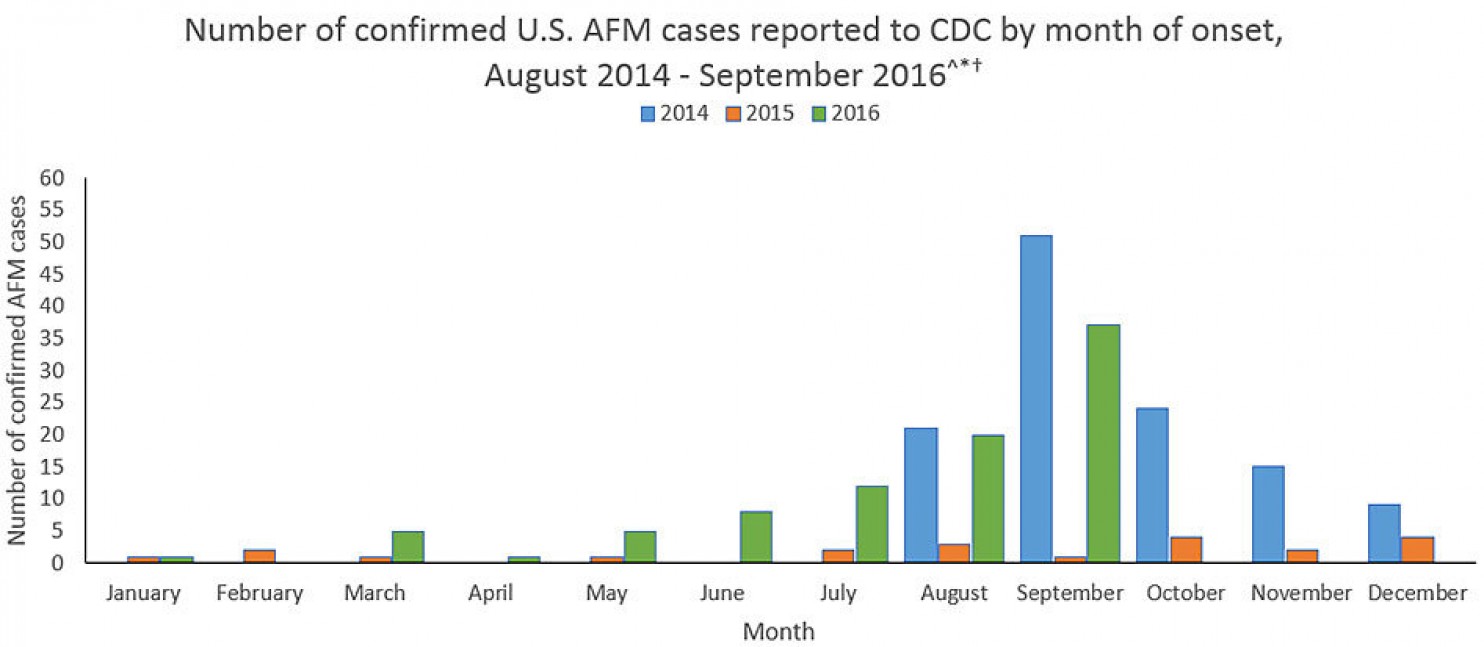


-Vander Harris

Links:


Yellow Fever Prevention in Angola

Between this past December and October, over 350 individuals died of yellow fever in the African country of Angola. This yellow fever outbreak is the worst one that Angola has seen in the past decade and, as a result, individuals have greatly worked to ramp up the vaccination rate in the country. People from WHO, UNICEF, and IFRC sent in 20 million vaccines to Angola and by this September, about 16 million people had been vaccinated, which is a relatively high amount considering there are 25 million people in Angola.

All the vaccination efforts as well as epidemiological surveillance efforts have led to no reported cases of yellow fever since June. However, rainy season is approaching and that is bringing great concern for the country and health organizations because Aedes aegypti mosquito is known to be most present during this season. While only so much can be done to eradicate a mosquito, the health administrators have turned to community mobilization efforts to increased information about prevention. UNICEF and IFRC have trained about 3,000 mobilizers that can spread information about the disease, sanitation, hand washing and breastfeeding to prevent yellow fever. These individuals are very helpful at helping spread awareness about the importance of the vaccine and help dispel myths about the vaccine leading to infertility.

Therefore, Angola has changed greatly since its past outbreak and has done a lot this past year to increase its awareness about and readiness for the viral disease.


Jeanette Rios

Friday, November 4, 2016

Acute Flaccid Myelitis Continues to Spread... Virus Connection Questioned

On October 16, we wrote here about the concerning number of AFM cases in North Texas. 
The polio-like disease has seemed to spread, with cases popping up in Philadelphia and the Seattle area through September and October. Nine children in Washington state have been tentatively diagnosed with AFM in the past few weeks; one died on October 30. Cases have also been reported in Europe and Canada.

This past Monday, October 31, a CDC confirmed a year-to-date 89 cases in 33 states. This is likely to match or exceed the 120 cases confirmed during the 2014. However, in this year's outbreak, there is less evidence that AFM is linked to enterovirus-D68; there is no accompanying respiratory illness associated with D68. However, D68 has been found in the spinal fluid of some AFM cases.

The mystery of this rare condition continues.


News Article:
http://www.nola.com/health/index.ssf/2016/11/more_cases_reported_of_a_myste.html

Previous Blog Post:
http://humansandviruses.blogspot.com/2016/10/acute-flaccid-myelitis-linked-to-virus.html

 
--Sharon Kam

Norovirus Outbreak at USC

The University of Southern California has had an outbreak of norovirus.  In the last week or so, over 103 cases have been reported (Outbreak News Today).  Norovirus, a member of the family Caliciviridae, has a fecal-oral transmission pattern (CDC - Transmission) that strikes its victims quickly, often in less than 48 hours (CDC - Symptoms).  Due to this transmission pattern, some speculate that the outbreak at USC resulted from either the dining hall or dorms (LAist).  This usually happens when an individual comes into contact with an infected individual’s fecal matter or vomit, typically via some type of fomite such as unwashed fruit or utensils (CDC - Transmission).

USC is encouraging sick students to avoid class and other activities to limit the spread of norovirus.  In addition, it is providing “stomach friendly” meals to bedridden students consisting of bananas, rice, applesauce, and toast in order to give them some sustenance while not upsetting their digestive system further (LAist).  This is good as the symptoms of norovirus typically center around diarrhea and vomiting lasting 1-3 days and students may be wary of eating.  Because of these symptoms, dehydration is also a major concern and patients are encouraged to focus on maintaining their fluid levels while sick (CDC - Symptoms).

  • Devon Z.

References:


Developing a Super Molecule to Destroy Viruses

Researchers at IBM’s Institute of Bioengineering and Nanotechnology in Singapore have begun research into a new molecular technology that could serve as a near universal method for viral treatment.  Due to the general variation within viruses, this treatment focuses on something that is found in a higher percentage of viruses, in this case, the targets are glycoproteins.  These glycoproteins are one of the keys in the ability of a virus to enter host cell and proceed with replication, so the researchers determined that this could be a viable option for treatment or prevention.  These observations resulted in the researchers synthesizing a bio-macromolecule that targets viruses based on the glycoproteins rather than the genetics of specific viruses; this development could provide promising breakthroughs in not only the treatment of viruses, but also the curing.  The molecule is said to work based upon two different factors, the first being the ability of the molecule to use variations in electrostatic charge to draw viruses to bond thus halting the virus from entering potential host cells and after bonding the molecule decreases the pH of the pathogen effectively lowering its replicative ability.  The second factor of the molecule is the ability of the molecule to protect the immune system, specifically its cells, by dispersing a sugar called mannose which bonds to said cells and aids in resistance to infection.  This technology has currently been tested to work upon Dengue and Ebola with promising results, and awaits further testing and trials before it will come close to human usage.

-Ethan Wentworth


Article: